

In this guide
You buy a bag that says “blueberry, honey, jasmine.” You brew it. It tastes like coffee. Have you bought the wrong beans, or are you supposed to be tasting something you can’t?
Usually, you just need a better translation. Coffee bags mix farming terms, processing methods, roast descriptions and tasting notes into a few square inches. Once you know which words help you choose, the shelf gets much less confusing.
This guide brings together the Barista in Pajamas coffee cheat sheets: how to find a flavour you enjoy, understand the bag, keep the beans fresh and make a good first brew. Get both free PDF cheat sheets to keep the quick reference on your phone.
Start with the cup you want
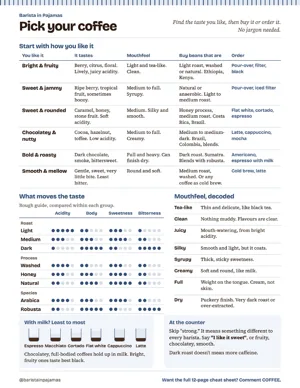
Before choosing a country or a fashionable process, think about the last coffee you enjoyed. Was it bright like fruit, rounded like caramel, or heavy and chocolatey? Did you drink it black or with milk? Those answers are more useful than asking for the “best” coffee.
| If you like… | Look for… | Try it as… |
|---|---|---|
| Bright & fruity | Light roast; citrus, berry or floral notes. Washed and natural coffees can both fit. | Pour-over or filter, tasted black first. |
| Sweet & jammy | Natural or fruit-forward fermented coffees; ripe berry and tropical notes. | Filter or iced filter coffee. |
| Sweet & rounded | Medium roast; caramel, honey or stone-fruit notes. Honey process is worth exploring. | Espresso, a cortado or a flat white. |
| Chocolatey & nutty | Medium to medium-dark roast; cocoa, hazelnut and toffee. A milk-focused blend can work well. | Latte or cappuccino. |
| Bold & roasty | Darker roast; dark chocolate and bittersweet notes. | Americano or espresso with milk. |
| Smooth & mellow | A balanced medium roast with gentle acidity; ask the roaster for a low-bitterness option. | Cold brew or a latte. |
These are directions to explore, not guarantees. A country produces many kinds of coffee, a natural can be wonderfully clean, and a light roast can taste good with milk. Let the roaster’s description and your own cup settle the question.
Coffee starts as a fruit
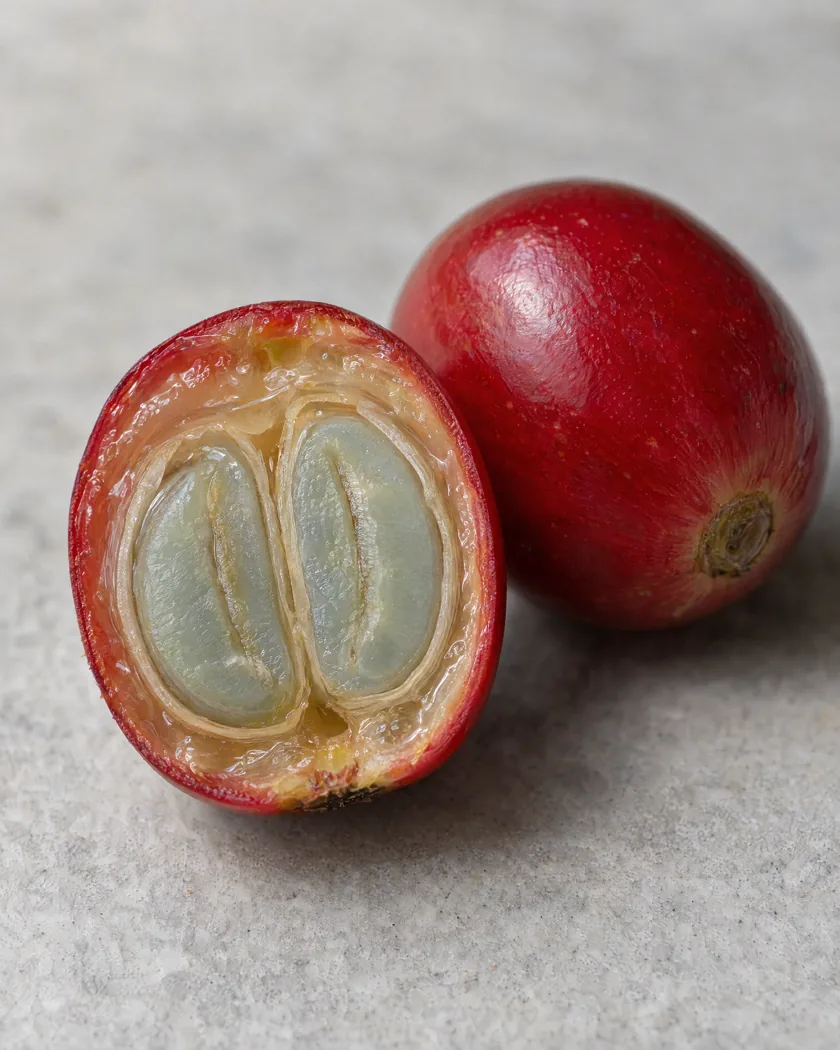
A coffee “bean” is a seed inside a cherry. Most cherries contain two seeds. Around them sit the fruit skin, pulp and sticky mucilage; closer to the seeds are a papery layer called parchment and a thin silverskin.
That anatomy explains much of the bag. Processing describes how the producer handles the cherry and dries the seed. Roasting develops the flavours and aromas we recognise as coffee. Tasting notes describe what someone perceived in the finished cup.
You may also see peaberry: a cherry developed a single rounded seed. It describes the seed’s form, not a promise that the coffee is better.
Light, medium or dark: choose the character
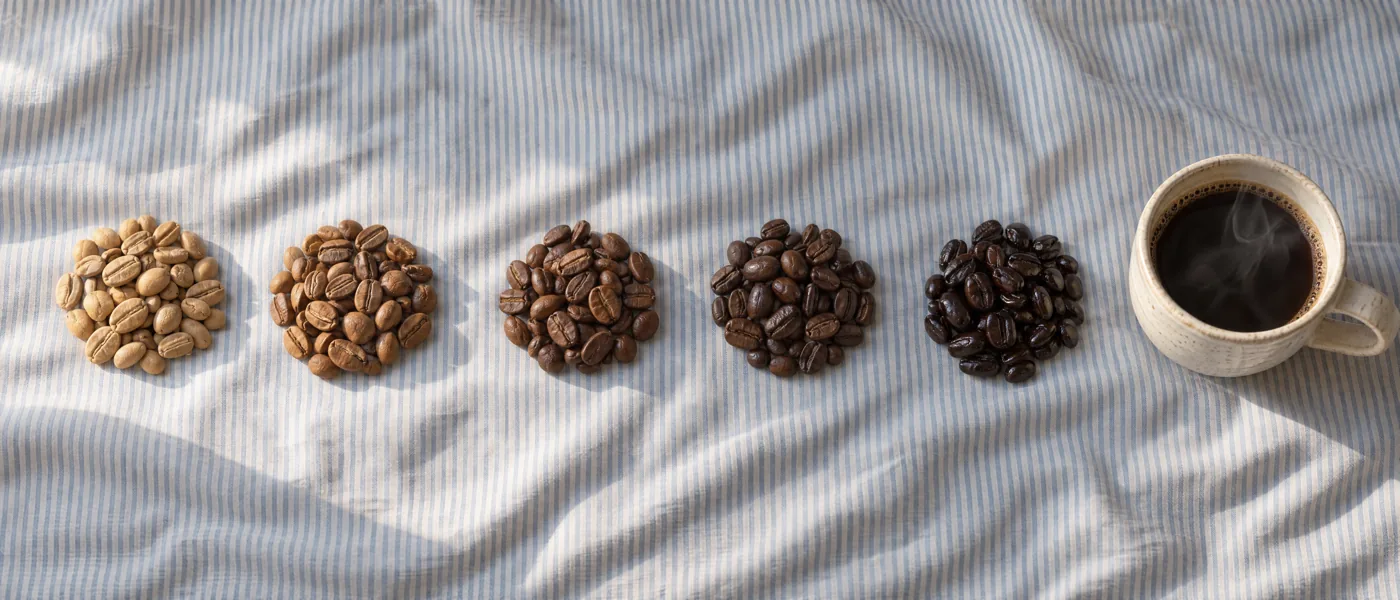
Roasting changes the bean’s structure and develops aroma through a complex set of reactions. As roasting goes further, roast flavours generally become more prominent. The useful question is how much brightness, sweetness and bitterness you enjoy together.
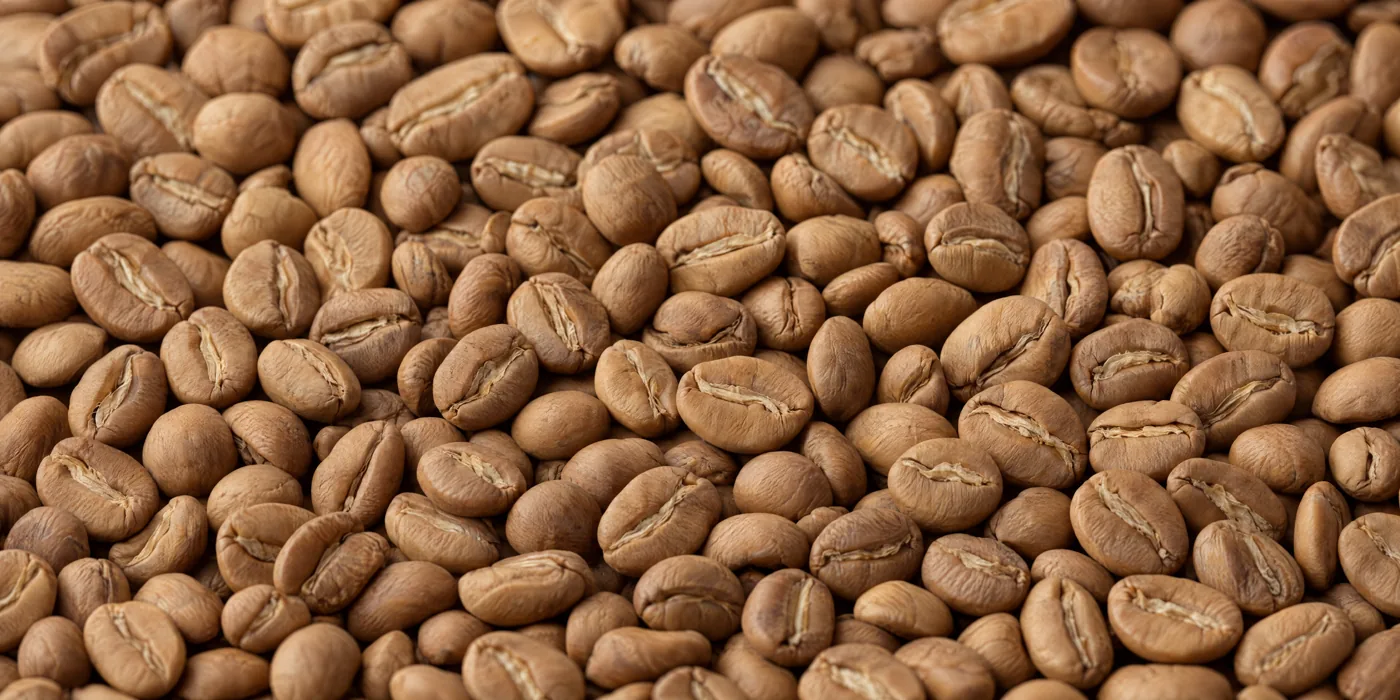
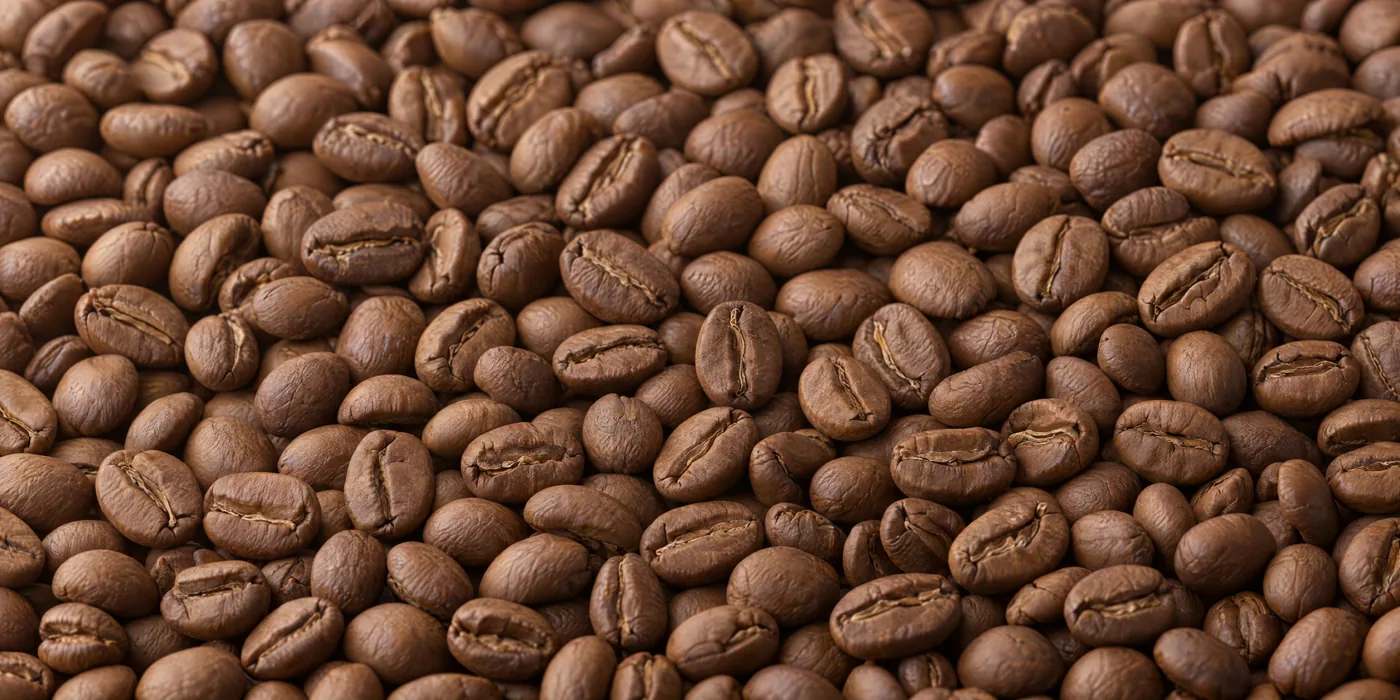
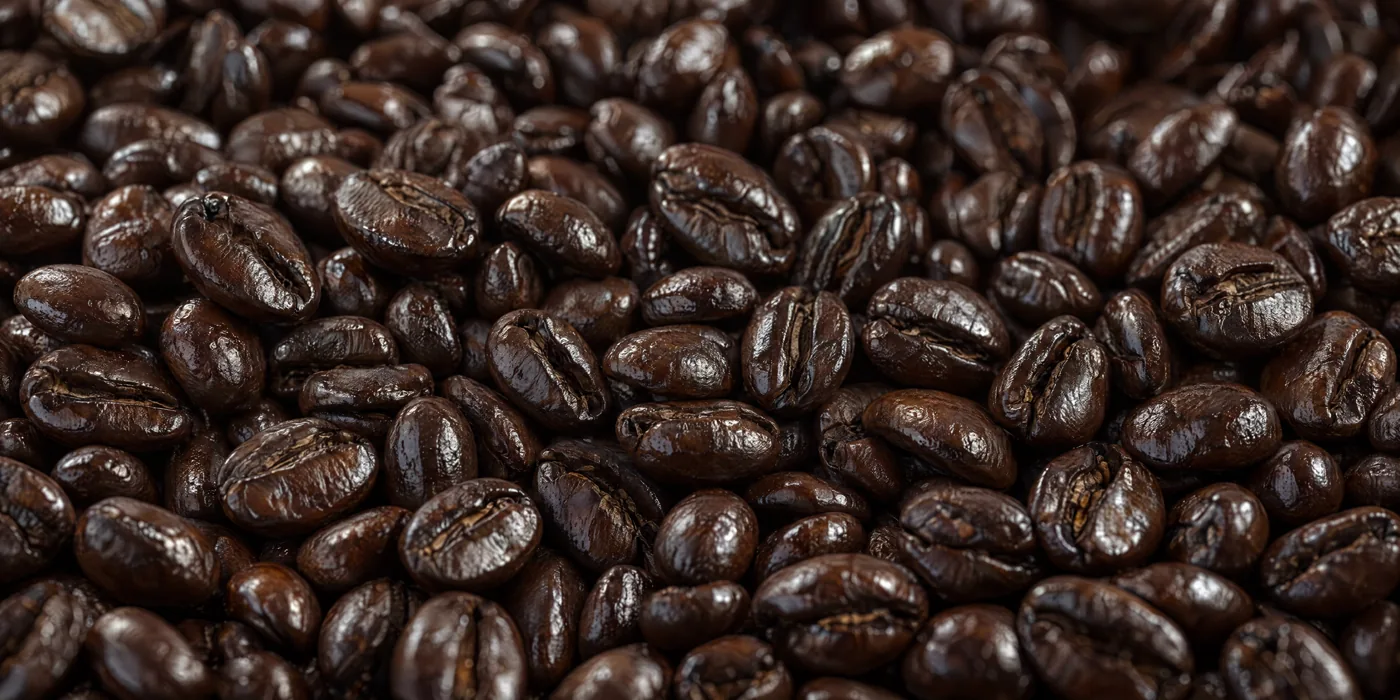
Roast labels aren’t a universal scale. One roaster’s medium may resemble another’s light. “Espresso roast” describes intended use; it does not automatically mean dark. “Omni roast” suggests the roaster intends it for both filter and espresso.
Three shortcuts to stop relying on
- Dark does not automatically mean more caffeine. Species, dose and preparation matter. Roast colour alone won’t tell you how much caffeine is in your cup.
- Oil does not prove freshness. Surface oil is common on darker roasts and can also appear during storage. Check the roast date and the aroma.
- “Strong” needs translating. You might mean concentrated, bitter, full-bodied or high in caffeine. Those are different requests.
For the brewing implications, read how roast level changes your grind.
Washed, natural and honey, without the jargon
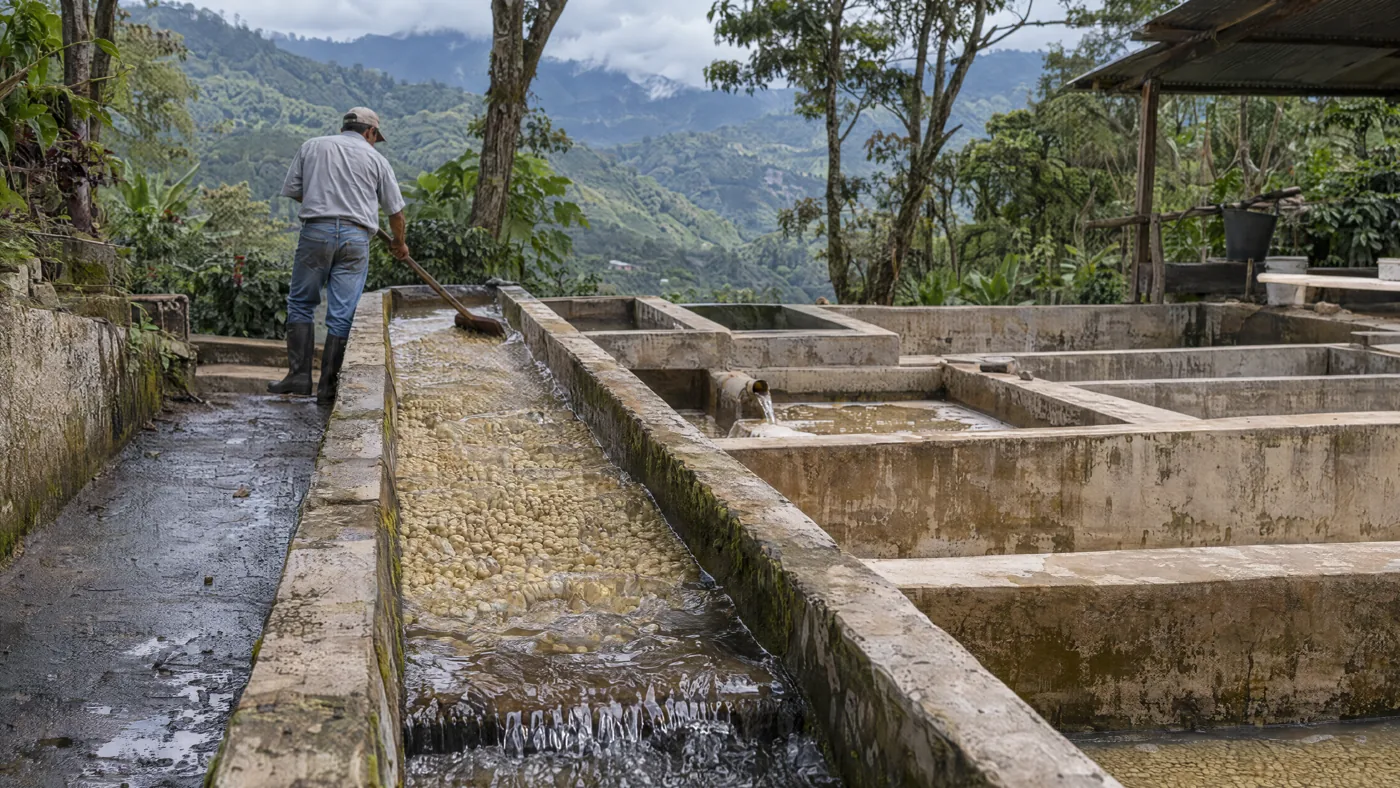
Processing starts with a practical problem: a wet fruit has to become a stable, dry seed. The amount of fruit left around the seed, the fermentation conditions and the drying all influence the result.
Washed: a useful place to begin
The skin and pulp are removed, and the mucilage is removed through fermentation and washing, mechanical means, or a combination. Washed coffees are often described as clean or clear: individual flavours are easy to distinguish. You may find citrus brightness, delicate fruit or a straightforward chocolate profile, depending on the coffee.
Natural: explore fruit and texture
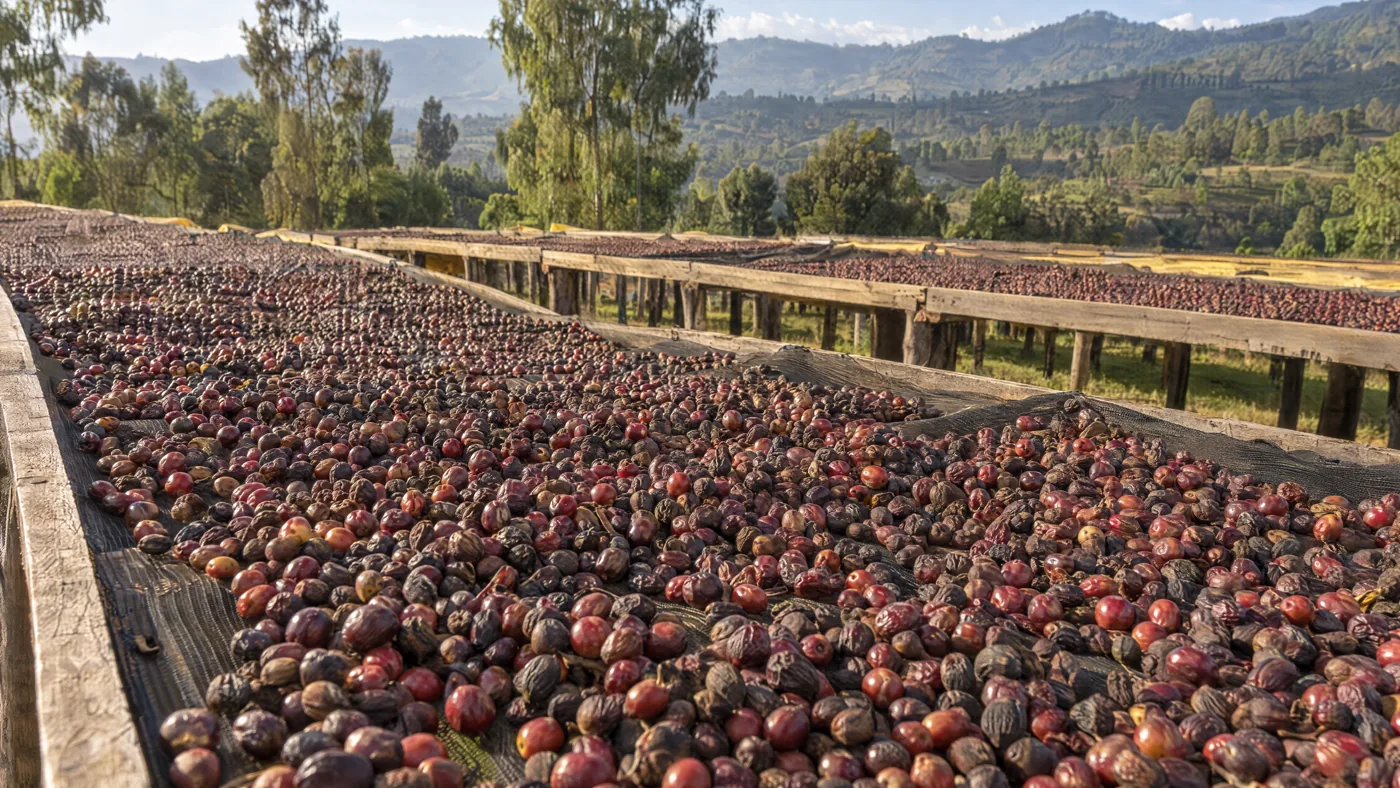
The whole cherry dries before the dried fruit is removed. Naturals can have berry, jam or wine-like character and a round mouthfeel. They can also be restrained and delicate. Careful sorting and drying matter more than the method’s fashionable reputation.
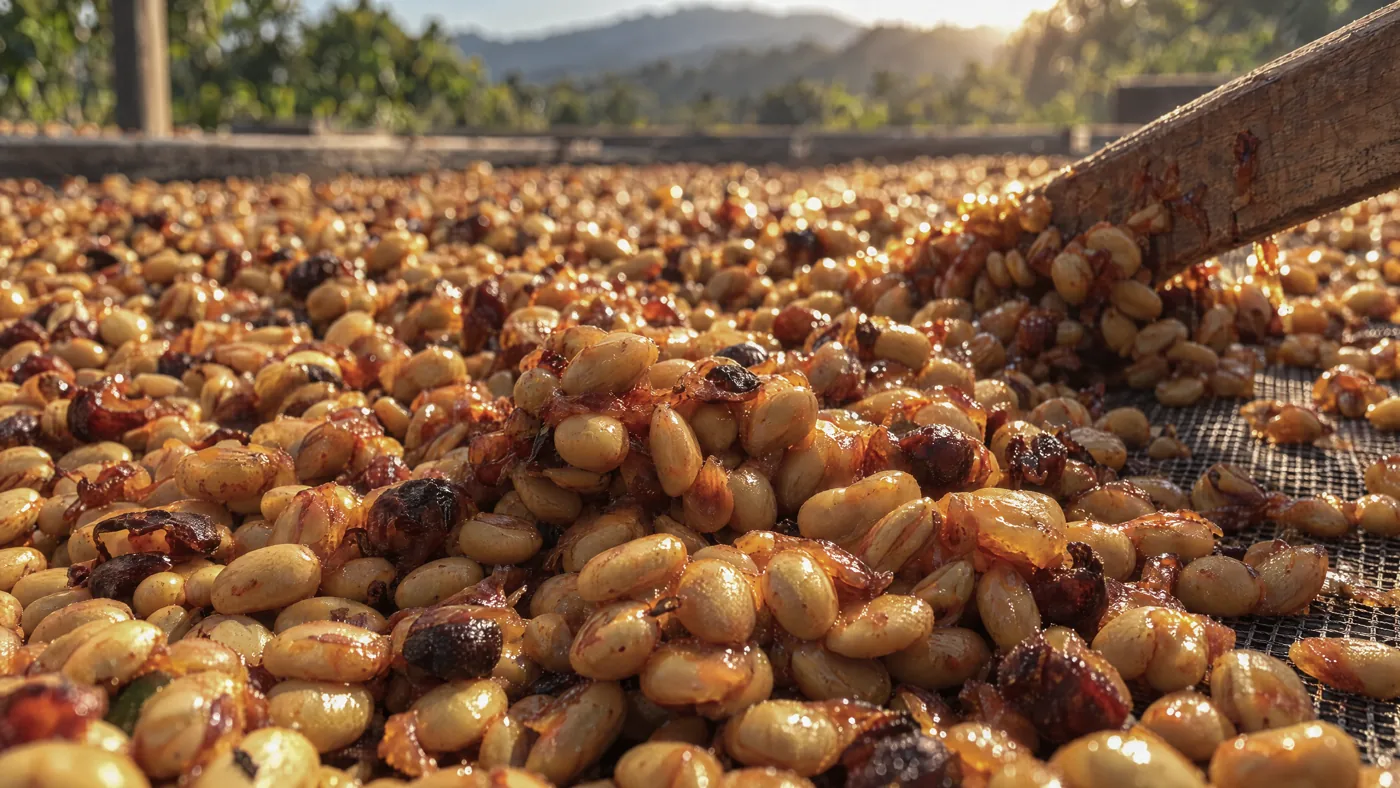
Honey and pulped natural: fruit partly removed
The skin comes off, while some mucilage stays during drying. Sweet, rounded and silky are useful descriptions to look for. Yellow, red and black honey are producer-specific labels tied to handling and drying; don’t treat them as a standard sweetness scale. Pulped natural is a closely related method strongly associated with Brazil.
The more unusual labels
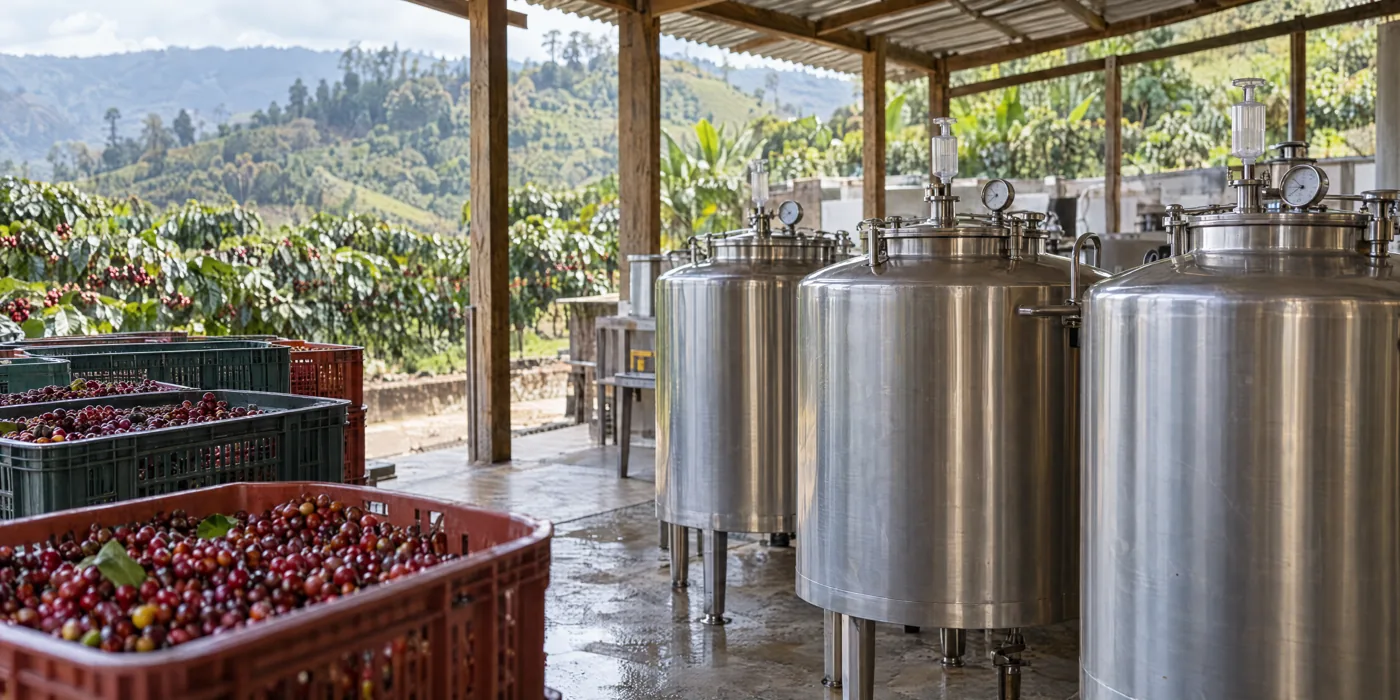
- Anaerobic: fermentation in low-oxygen conditions, often in sealed tanks. Some lots have intense fruit or spice notes; the word alone does not guarantee them.
- Carbonic maceration: usually involves whole cherries in a carbon-dioxide-rich environment. Ask how the producer used the term.
- Yeast-inoculated or controlled fermentation: selected microbes or carefully managed conditions help steer fermentation.
- Co-fermented or infused: ingredients may have been introduced during processing or later. Terminology varies, so ask what was added and when.
- Wet-hulled, or giling basah: parchment is removed at a higher moisture content before final drying. Common in Indonesia; often associated with earthy, herbal profiles and substantial body.
Unusual tasting notes are a reason to ask questions, not proof of additives. A useful one is: “Is this flavour entirely from the coffee, or was anything introduced during processing?”
Before roasting: aging, monsooning and decaf
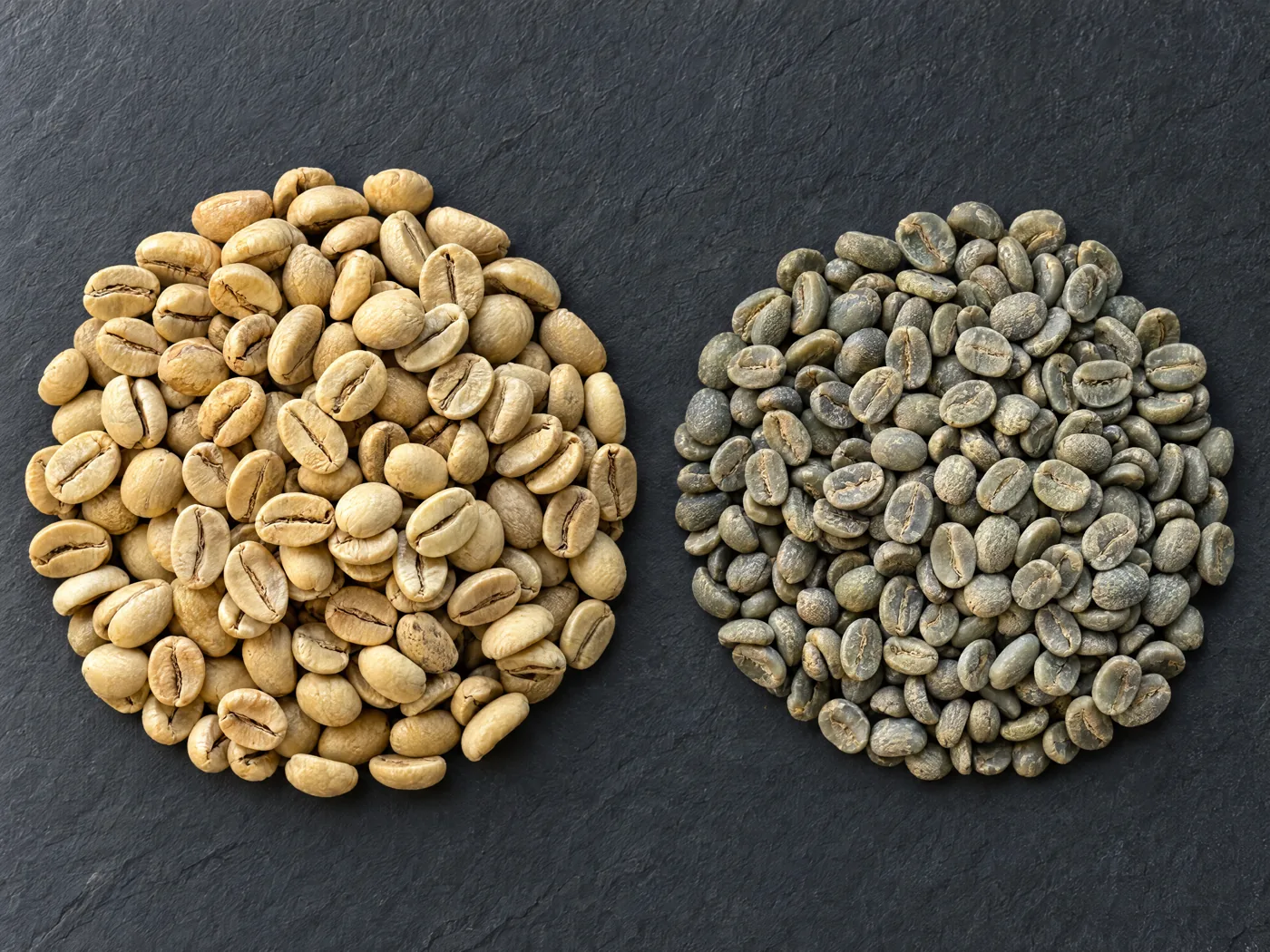
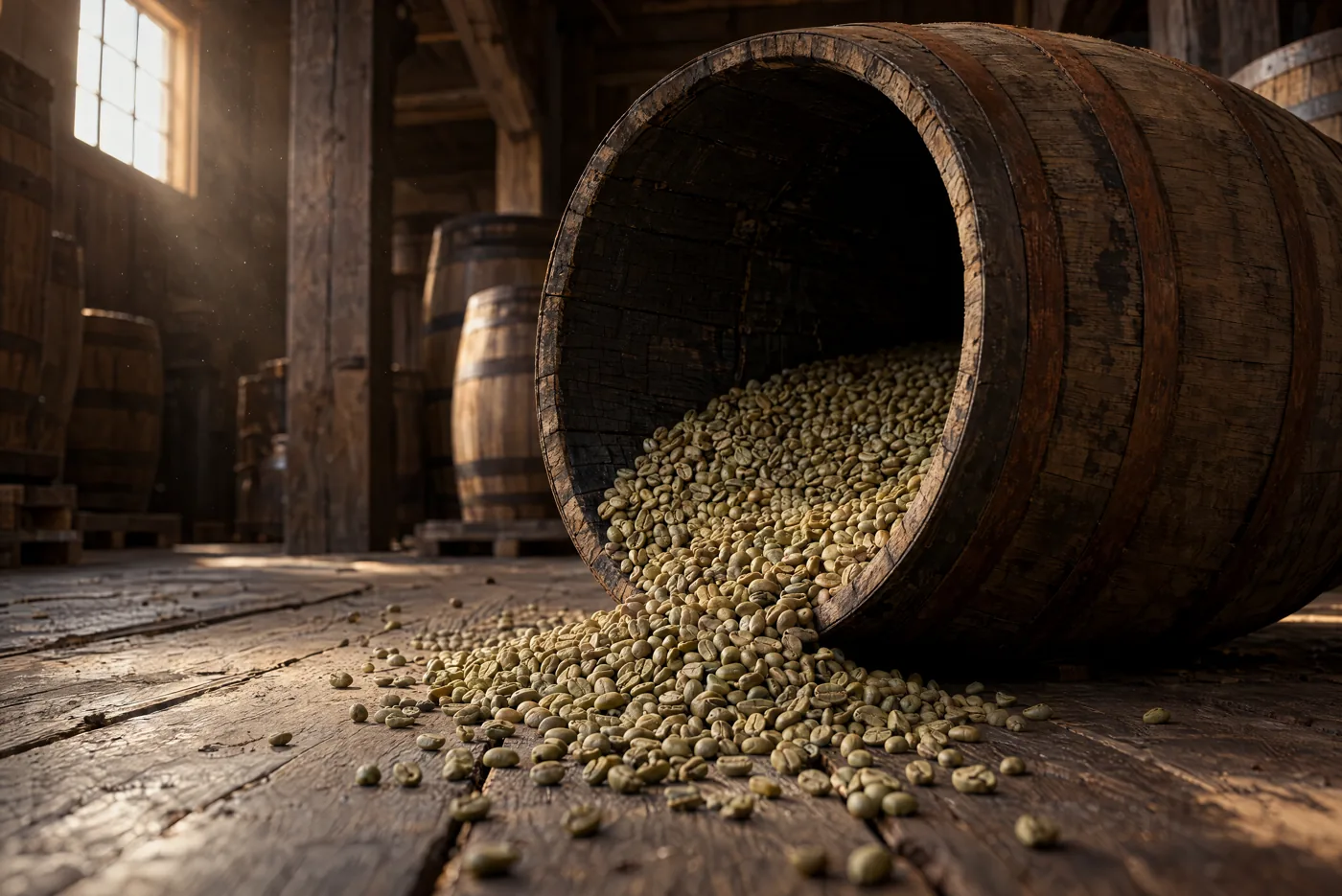
Monsooned Malabar is associated with India: green coffee is exposed to humid monsoon conditions, changing its appearance and cup character. Earthy, spicy and mellow are common descriptions. Aged green coffee is deliberately stored before roasting; that is a different idea from leaving roasted coffee to go stale. Barrel-aged coffee rests in barrels that may previously have held wine or spirits, picking up aroma.
For decaf, caffeine is removed while the coffee is still green. You’ll see water-based processes, ethyl acetate (often labelled sugarcane or EA), carbon dioxide and solvent-based methods. Decaf still contains some caffeine; the amount depends on the coffee and the process. Swiss Water, for example, describes its output as 99.9% caffeine-free. Read the producer’s explanation.
Choose decaf using the same flavour questions as any other coffee. Ask about roast date and brewing advice, buy an amount you’ll use while it tastes fresh, and judge it in the cup.
Species and varieties: useful clues, not rankings
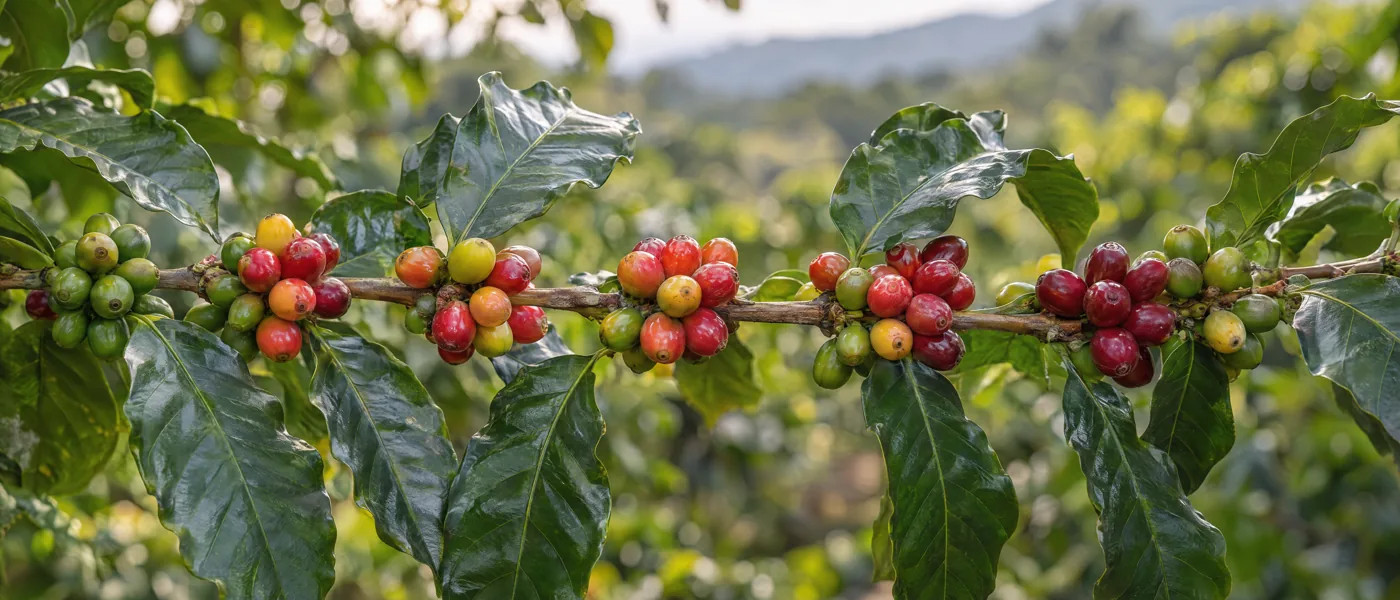
Arabica often offers a broad range of floral, fruit and sweet flavours. Robusta, the common name used for much Coffea canephora coffee, generally contains more caffeine and can bring substantial body and bitterness. Quality and preferences vary within both. “100% arabica” identifies a species; it doesn’t guarantee a delicious bag.
A variety is a more specific kind of plant. Bourbon, Typica, Caturra, Catuaí, Gesha, SL28 and Pacamara are names you may meet. They can offer clues, but a variety grows in a place, then passes through processing and roasting. It does not carry a fixed flavour wherever it goes. “Ethiopian heirloom” is a broad label rather than one precisely identified variety. The World Coffee Research variety catalog is a useful reference when you want to look up a name.
Read tasting notes as a description
On an unflavoured coffee, “blueberry” generally describes an impression of aroma and flavour, not an ingredient. Think of notes as a forecast. Your grinder, water, recipe and taste perception influence what you notice.
You don’t have to identify the exact fruit. Start with broad families: fruity, floral, nutty, chocolatey, caramel-like, spicy or earthy. The World Coffee Research Sensory Lexicon gives shared references for flavour, aroma and texture when you want to become more specific.
- Acidity
- Brightness or liveliness, like the snap of an apple. Pleasant acidity and an unpleasantly sour brew are not the same experience.
- Body
- The weight or fullness of the drink. Compare the feel of tea, milk and cream.
- Sweetness
- A perceived sweet quality. Caramel-like coffee still tastes different from coffee with sugar added.
- Finish
- What stays after swallowing: perhaps clean and sweet, or dry, bitter and lingering.
Tea-like means delicate; silky suggests smoothness; syrupy suggests a thicker, coating texture. “Clean” describes clear flavours, not a cleaning claim. “Dry” means a puckering or drying finish, which can have several causes.
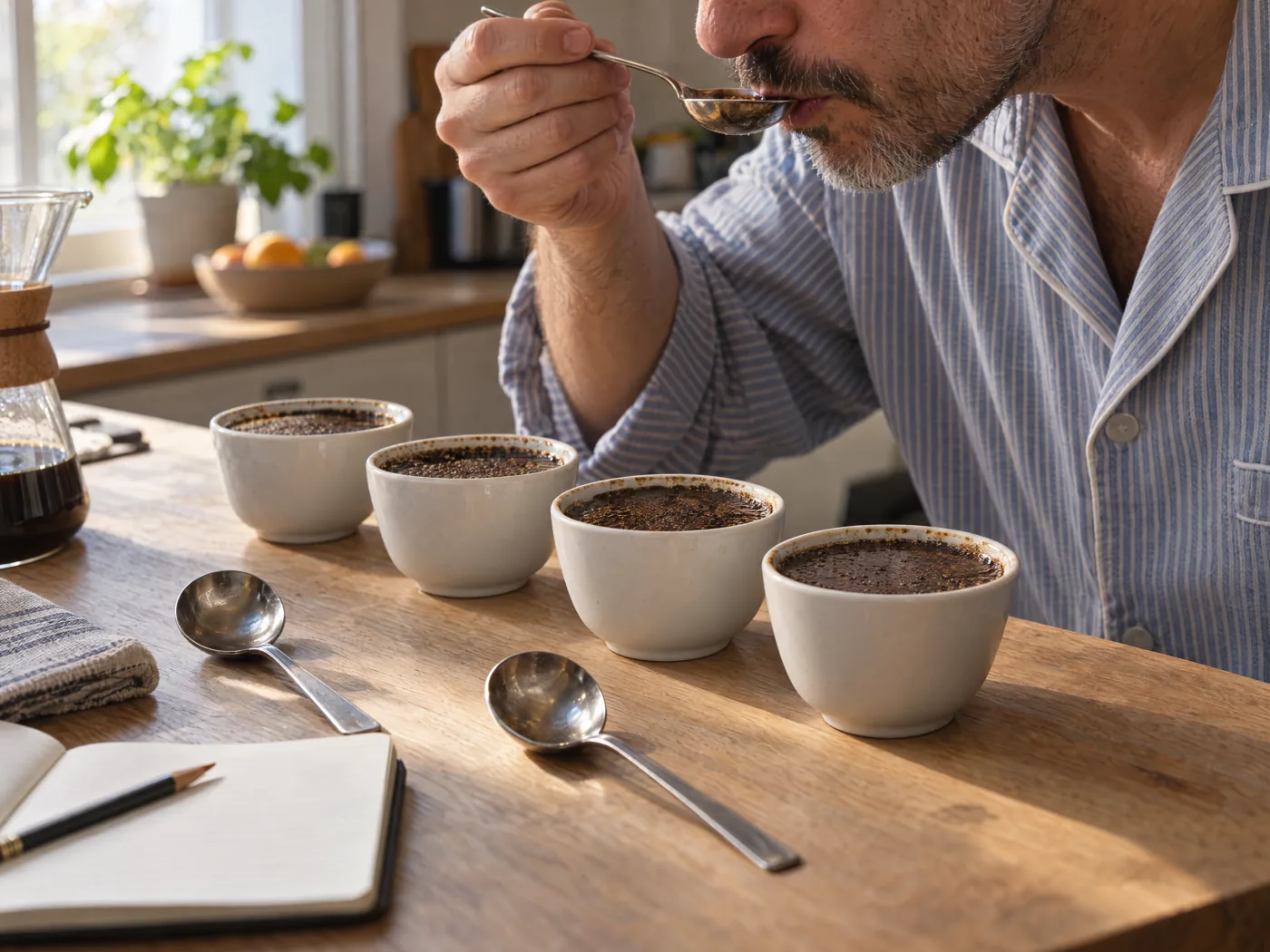
Try two coffees side by side with the same water and brewing method. Smell first. Taste while warm, then again as they cool. Write down one flavour and one texture for each. You’re building a record of what you enjoy, not trying to pass a vocabulary exam.
How to read a bag before buying it
- Find the roast date. It helps you plan when to brew. A best-before date alone tells you much less about that timeline.
- Read the flavour description. Choose notes that fit the cup you want.
- Check roast level and process. If the roast isn’t stated, ask; don’t assume medium.
- Look at the origin detail. Region, producer, farm or cooperative usually tells you more than country alone.
- Choose a sensible amount. Whole beans keep their aroma better before grinding. If you need pre-ground, buy smaller quantities ground for your brewer.
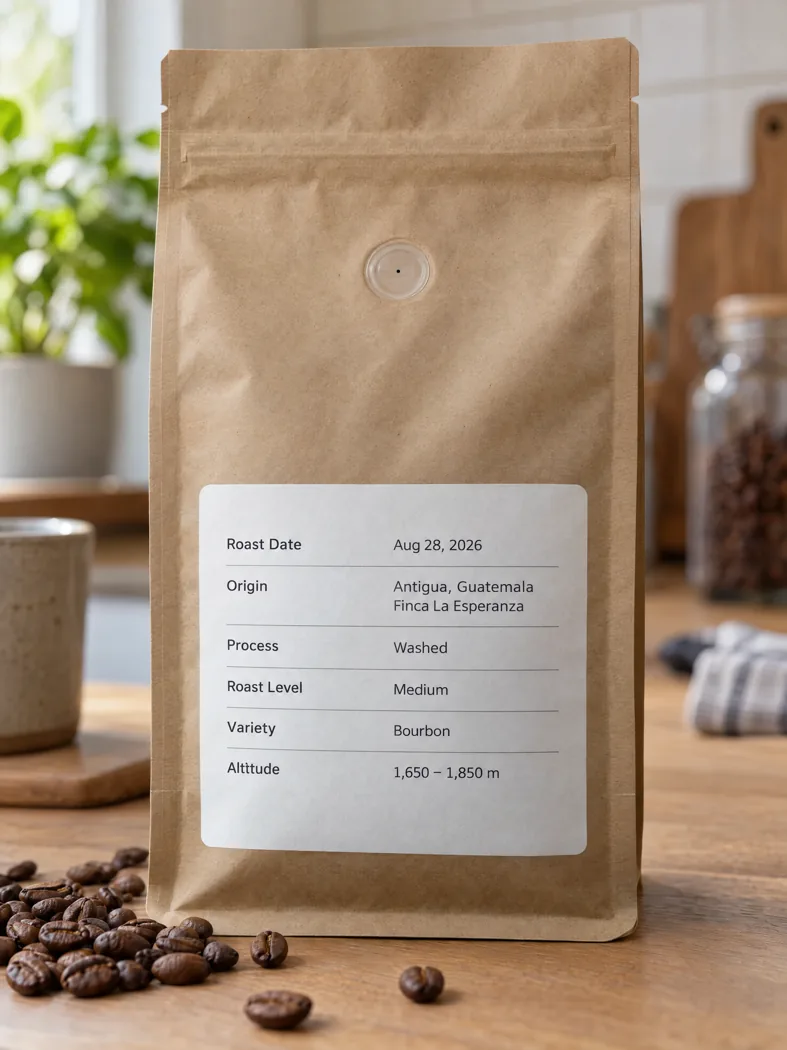
Single origin can mean one country, region, farm or lot; check how specific the label is. A blend combines coffees to achieve a particular balance or consistency. It can be an excellent choice for everyday espresso and milk drinks. A microlot is a small, separately identified lot, not an automatic quality grade.
Certifications and sourcing claims answer different questions from tasting notes. If a farming standard or trade arrangement matters to you, check the named scheme and what the producer or roaster actually discloses. “Direct trade” is not one universal certification.
“Specialty” also deserves context. The familiar 80-point threshold is historical shorthand; the SCA now describes specialty through distinctive attributes and the value they create. Neither a score nor the word on a bag guarantees your favourite flavour. See the SCA’s definition.
Give the beans a good life at home
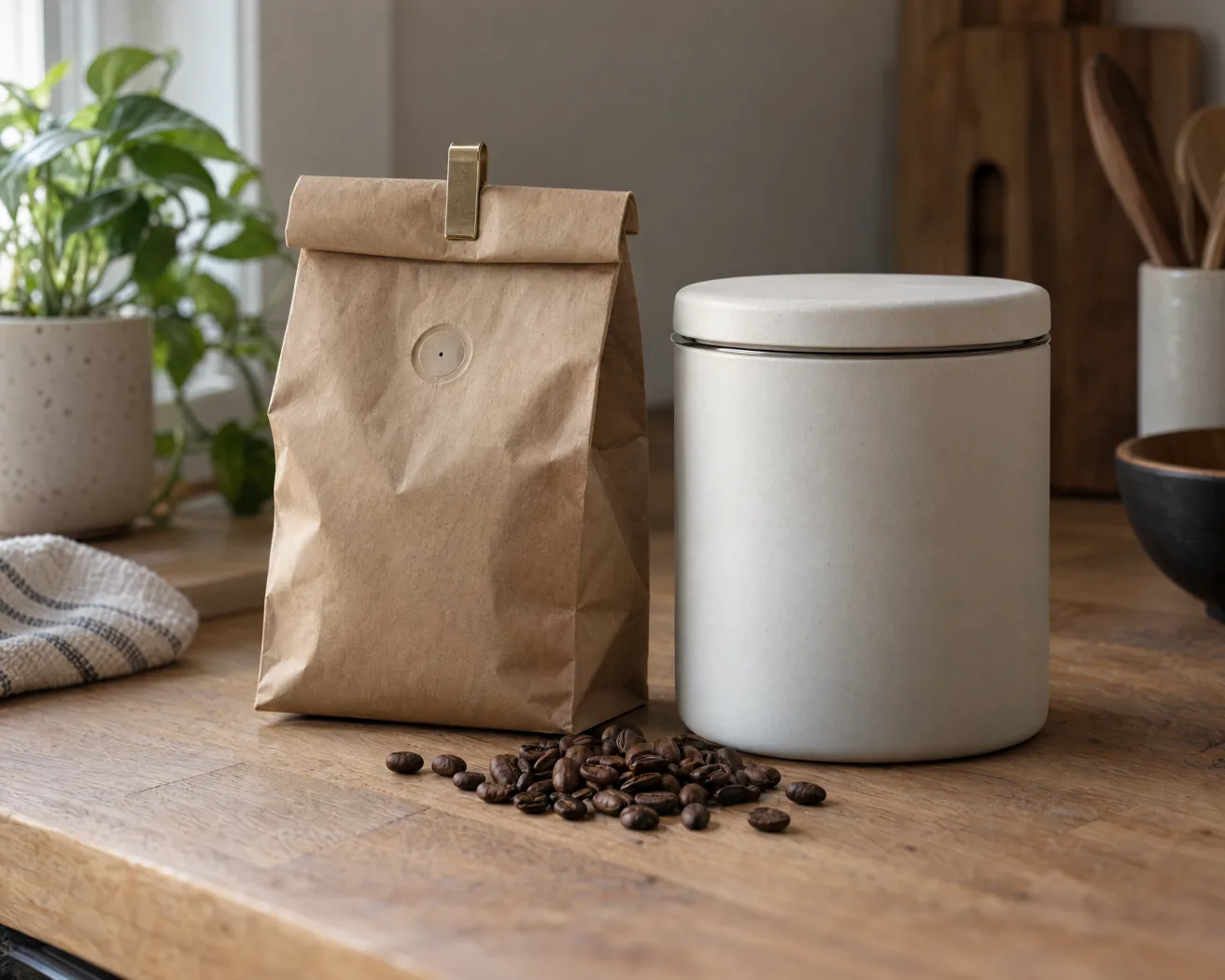
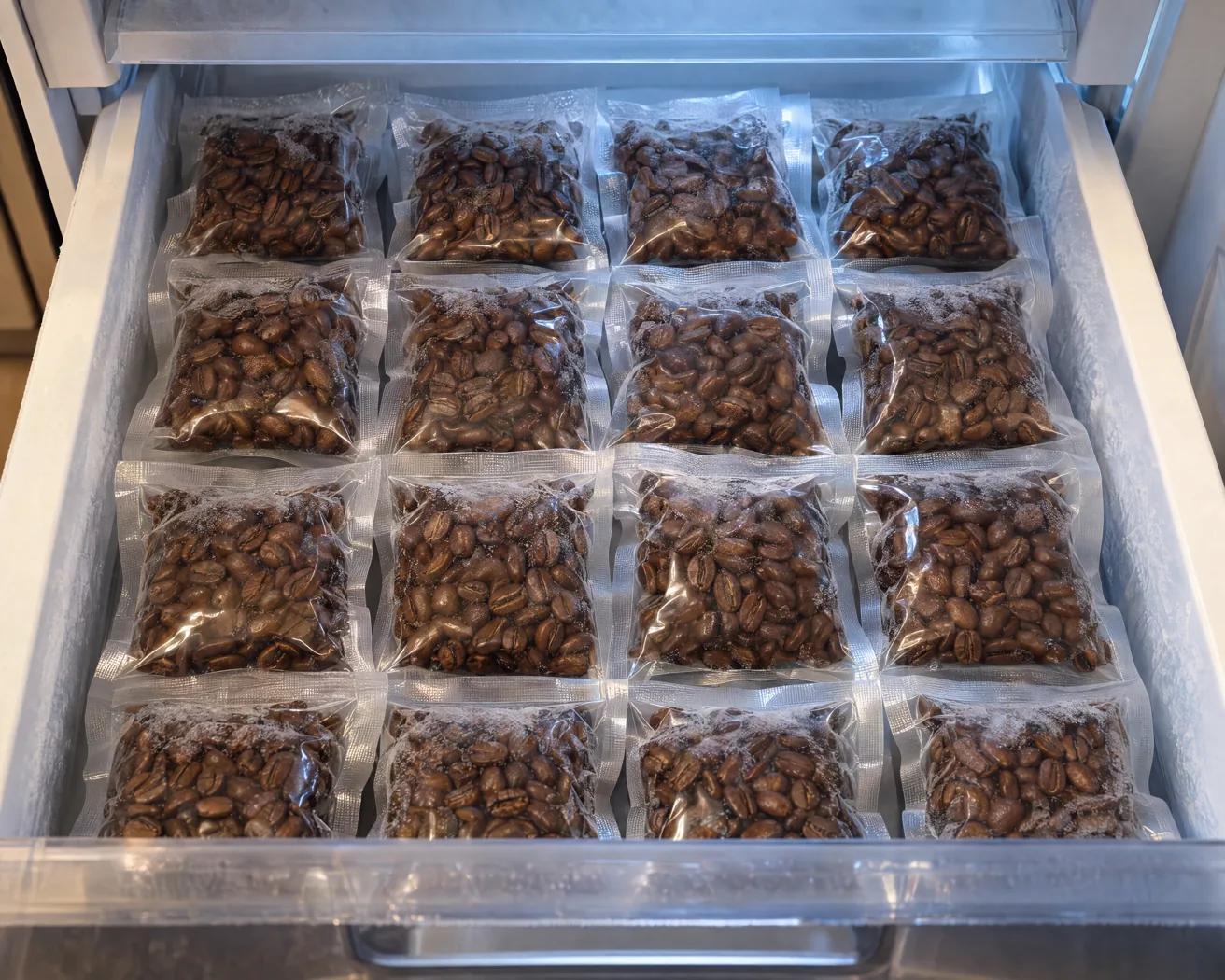
Freshly roasted coffee releases gas, so “as fresh as possible” is not always the easiest coffee to brew. The cheat sheet suggests several days’ rest for filter, roughly one to two weeks for espresso, and sometimes two to four weeks for light espresso roasts. Treat those as trial windows. Roast style, packaging and brewing method all matter; the roaster’s recommendation is a good first reference.
Keep the bag well closed or use an airtight container in a cool, dark cupboard. Avoid the stove and repeated trips in and out of the fridge. Buy an amount you can enjoy over the coming weeks instead of treating one date as a universal expiry.
For longer storage, freeze small airtight portions. If you’re opening a container after thawing, let it warm up while still sealed to reduce condensation on the beans. You can also grind a frozen single dose directly. Avoid repeatedly warming and refreezing the same supply. The freshness and storage guide goes further.
Your first brew: measure, taste, change one thing
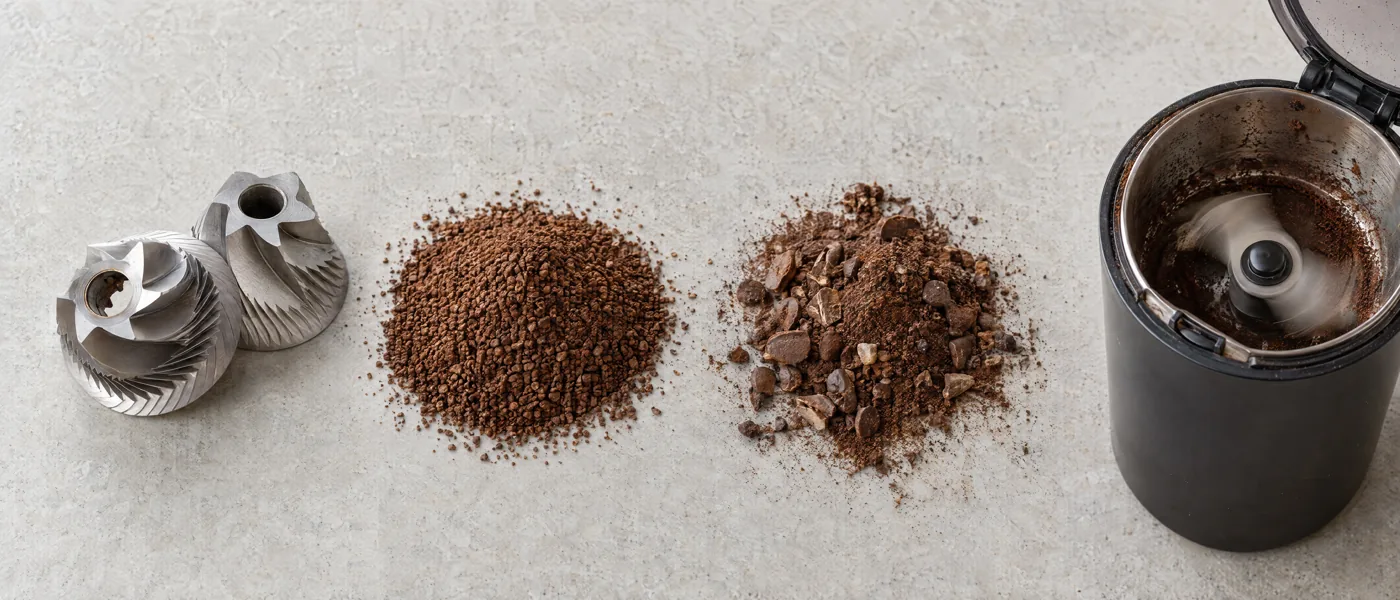
A burr grinder gives you more control over grind size than a blade grinder. Both flat and conical burrs can make excellent coffee; the burr design, condition, alignment and whole grinder matter more than a simple “clarity versus body” rule. If you buy pre-ground, ask for the grind that suits your brewer.
Use a scale for coffee and water. A ratio of 1:16 means 1 gram of coffee for every 16 grams of water: 20 grams of coffee and 320 grams of water. Espresso ratios usually compare dry coffee with the finished drink instead: 18 grams in and 36 grams out is 1:2.
| Method | Coffee & water / yield | First approach |
|---|---|---|
| Espresso | 18 g coffee → 36 g drink | Fine grind; around 25–32 seconds as an initial reference, not a pass/fail target. |
| Pour-over | 20 g coffee + 300–340 g water | Medium-fine grind; bloom for 30–45 seconds; roughly 2½–4 minutes total. |
| Drip machine | 30 g coffee + 450–510 g water | Medium grind; let the brewer run its cycle. |
| AeroPress | 15 g coffee + 180–240 g water | Fine to medium grind; a 1–3 minute steep is one useful starting approach. |
| French press | 20 g coffee + 240–320 g water | Start coarse; steep 4 minutes or more, then pour gently. |
| Cold brew concentrate | 50 g coffee + 250–400 g water | Coarse grind; steep cold for 12–24 hours, then filter and dilute to taste. |
| Moka pot | Use the maker’s water level and basket capacity | Fine-medium grind; don’t tamp. Follow the brewer’s instructions and remove from heat before prolonged sputtering. |
| Turkish / Persian style | 10 g coffee + about 100 g water | Powder-fine grind; heat gently toward foaming. The coffee remains unfiltered. |
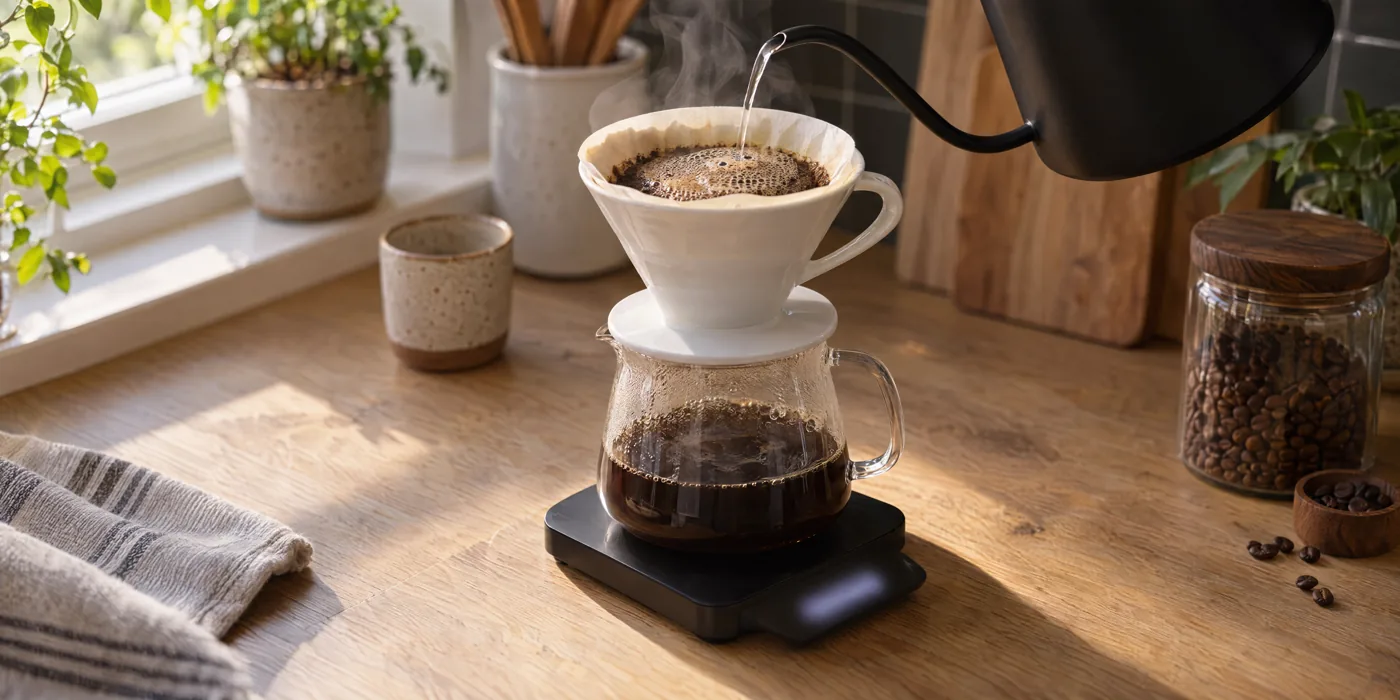
For many hot filter brews, 90–96°C / 194–205°F is a useful starting range. Lighter roasts often suit the hotter end; darker roasts may taste better cooler. Start with clean-tasting water, and follow your espresso machine’s water requirements and maintenance instructions.
Make the next cup a useful experiment
- Sour and thin? Try one change: a slightly finer grind, a longer extraction, or hotter water where your method allows it.
- Bitter, harsh or drying? Try a slightly coarser grind, cooler water or a shorter extraction. Roast character and uneven brewing can also be involved.
- Weak but otherwise pleasant? Use more coffee for the same water.
- Too concentrated but balanced? Add a little water to the finished drink.
Change one variable, keep the rest steady and note what happened. These are diagnostic starting points; a coffee can be naturally bright, a dark roast can be bitter, and uneven extraction can taste sour and drying at once. The dial-in guide helps you work through that.
Order the coffee you actually wanted
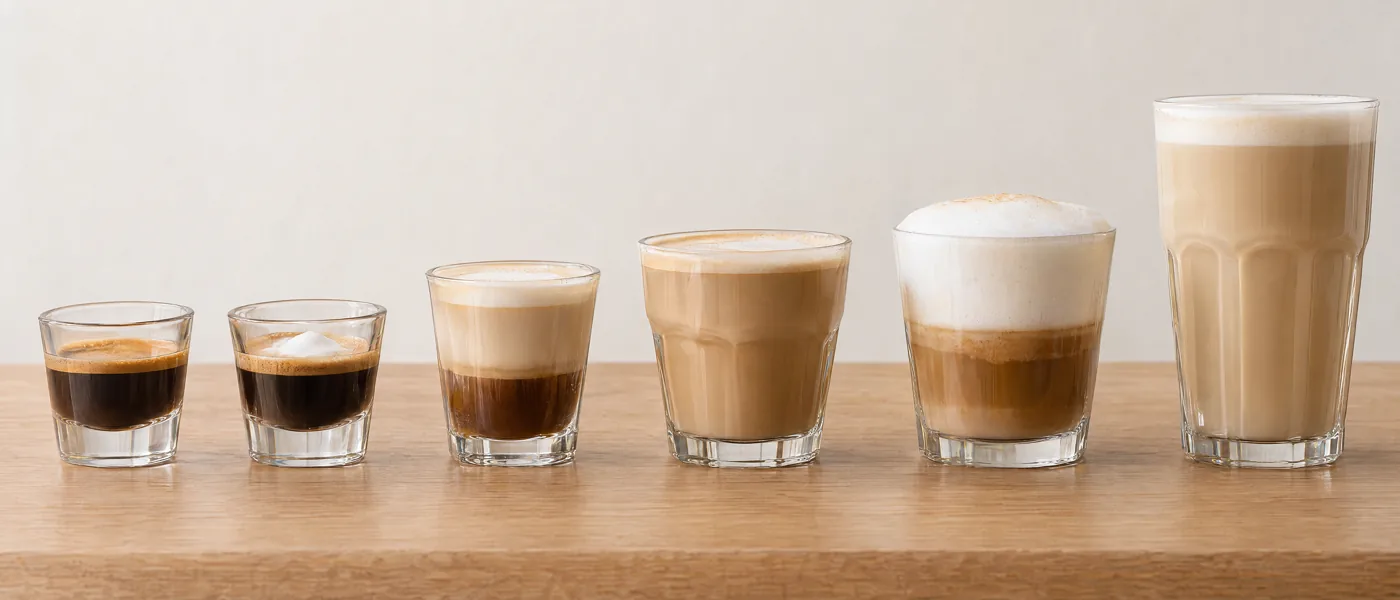
Espresso is concentrated coffee. A macchiato adds a small amount of milk or foam; a cortado is commonly close to equal parts espresso and warm milk. A flat white usually has fine, velvety milk texture, a cappuccino more foam, and a latte more milk overall. Ask about the café’s size and shot count if the balance matters to you.
An Americano is espresso diluted with hot water. A long black usually starts with the water, then espresso. A mocha adds chocolate to a milk coffee. Cold brew steeps coffee in cold water; iced coffee may be hot-brewed then chilled or brewed over ice. They can taste very different.
At the counter, try: “I like chocolatey coffee with milk,” “I’d like something fruity to drink black,” or “What’s your least bitter option?” If caffeine is the concern, say that explicitly instead of asking for something weaker.
Then pay attention to what you enjoy. A useful coffee vocabulary helps you order your favourite cup. It doesn’t tell you which cup you’re allowed to like.
Keep the good bits close.
Two free cheat sheets by Barista in Pajamas. Save them on your phone, print one for the kitchen, or take them to the coffee shop.
Your cheat sheets are ready.
Save both PDFs now. These links work for 30 minutes; you can enter your email again if they expire.
About this guide
Adapted from the two Barista in Pajamas cheat sheets, with the supplied coffee illustrations. The PDF downloads are the original editions. This article adds context where the quick-reference format simplifies things: flavour patterns are tendencies, roast labels vary, brew recipes are starting points, and café recipes differ.
Keep exploring: coffee processing, freshness, pour-over basics and guided courses.